
Stark Defense
Iran struck a ship in the Strait of Hormuz, the first attack since the ceasefire, and proved it can still close the waterway at will. Also inside: a €3.5B European drone raise, a $984M Doomsday-plane

Iran struck a cargo vessel transiting the Strait of Hormuz yesterday, the first attack since Washington and Tehran agreed last week to work toward a peace deal. A U.S. official told CNN an Iranian drone hit the ship on its starboard side and damaged the bridge. No crew were injured and there was no environmental impact, but the strike proves Tehran can still close the strait at will, ceasefire or not.
This is different from the wartime harassment that came before it. The strike landed hours after the Islamic Revolutionary Guard Corps warned that ships would get safe passage only on Iranian-declared routes, and after Tehran’s newly created Persian Gulf Strait Authority told vessels that “unauthorized routes” travel at their own risk. The attack was the enforcement of that claim. Iran is asserting jurisdiction over an international waterway and daring the world to treat the lanes as anything other than Iranian-approved.
Secretary of State Marco Rubio was in Bahrain selling the deal to skeptical Gulf states when the ship was hit, and the attack forced the UN’s International Maritime Organization to pause its evacuation of more than 11,000 stranded seafarers. Crossings had just reached 70 on Wednesday, the highest since the war began in February, before traffic fell again Thursday. Brent crude closed up 2% at $74 a barrel. In one strike Iran reminded every shipper, insurer, and Gulf capital that the strait reopens on its terms.
Support for the deal is already thinning inside the U.S., and Iran knows it. With technical talks set to begin June 30, the strike is a move to harden Tehran’s position before the working groups convene. The 14-point memorandum already grants Iran a formal role overseeing commercial traffic alongside Oman and reopens the strait without tolls for only 60 days. Iran will push to make that oversight permanent and to charge for transit indefinitely, whether it calls the charge a toll, a fee, or a service. Rubio has drawn the line: “no country on Earth has a right to charge for the use of international waterways.” The vessel listing in Hormuz is Iran’s attempt to prove otherwise.
Make your way to Industrial Base Alpha’s main website to track the latest deals, financial analysis, and webinars.
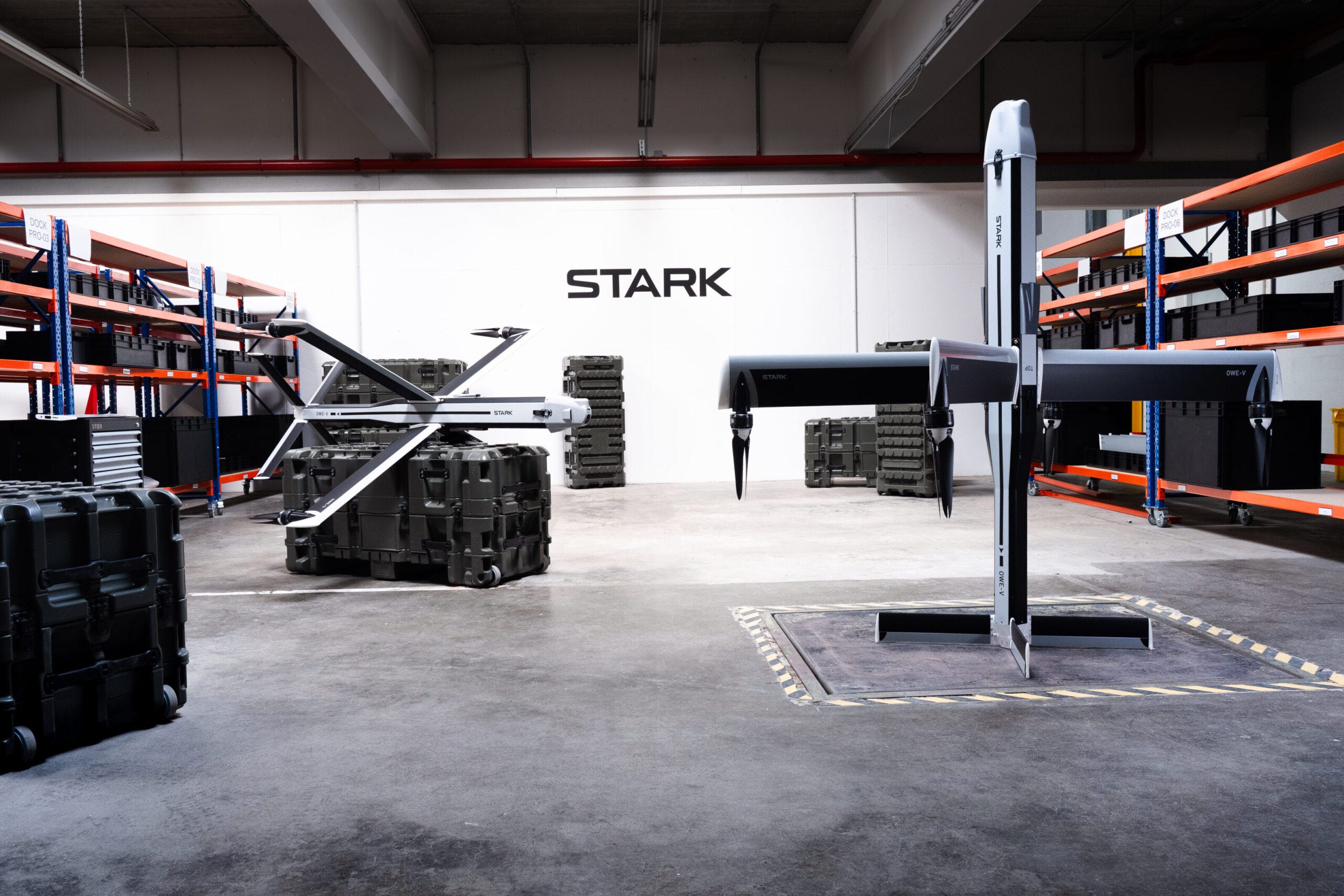
Stark Defence raises €500M at €3.5B valuation for loitering munitions
Stark Defence (no relation to Tony Stark or Stark Industries) raised €500M at a €3.5B valuation to scale production of loitering munitions and unmanned systems for European militaries.
Sequoia, Founders Fund, and the NATO Innovation Fund anchor a cap table that pairs Silicon Valley money with European strategic capital.
The Berlin company is riding a continent-wide rearmament push and sustained drone demand from the war in Ukraine.
A young maker of attack drones now carries a €3.5B valuation, which shows how fast Europe is repricing its own defense industrial base.

Strategic Mission Systems wins $984M USAF E-4B "Doomsday plane" sustainment contract
The aircraft designed to run a nuclear war is a 1970s Boeing 747 that just needed $984M of tech support to keep its software current. Strategic Mission Systems won a IDIQ contract to modernize and sustain the U.S. Air Force E-4B fleet through 2037.
The E-4B is the airborne nuclear command post built on the Boeing 747-200, an airframe that first flew in the 1970s.
The award covers engineering, software sustainment, cybersecurity, and integration-lab expansion across multiple bases, keeping four aging jets mission-ready while a next-generation replacement program runs behind schedule.
Paying nearly $1B to extend a 50-year-old design tells you how far the new airborne command post still is from delivery.
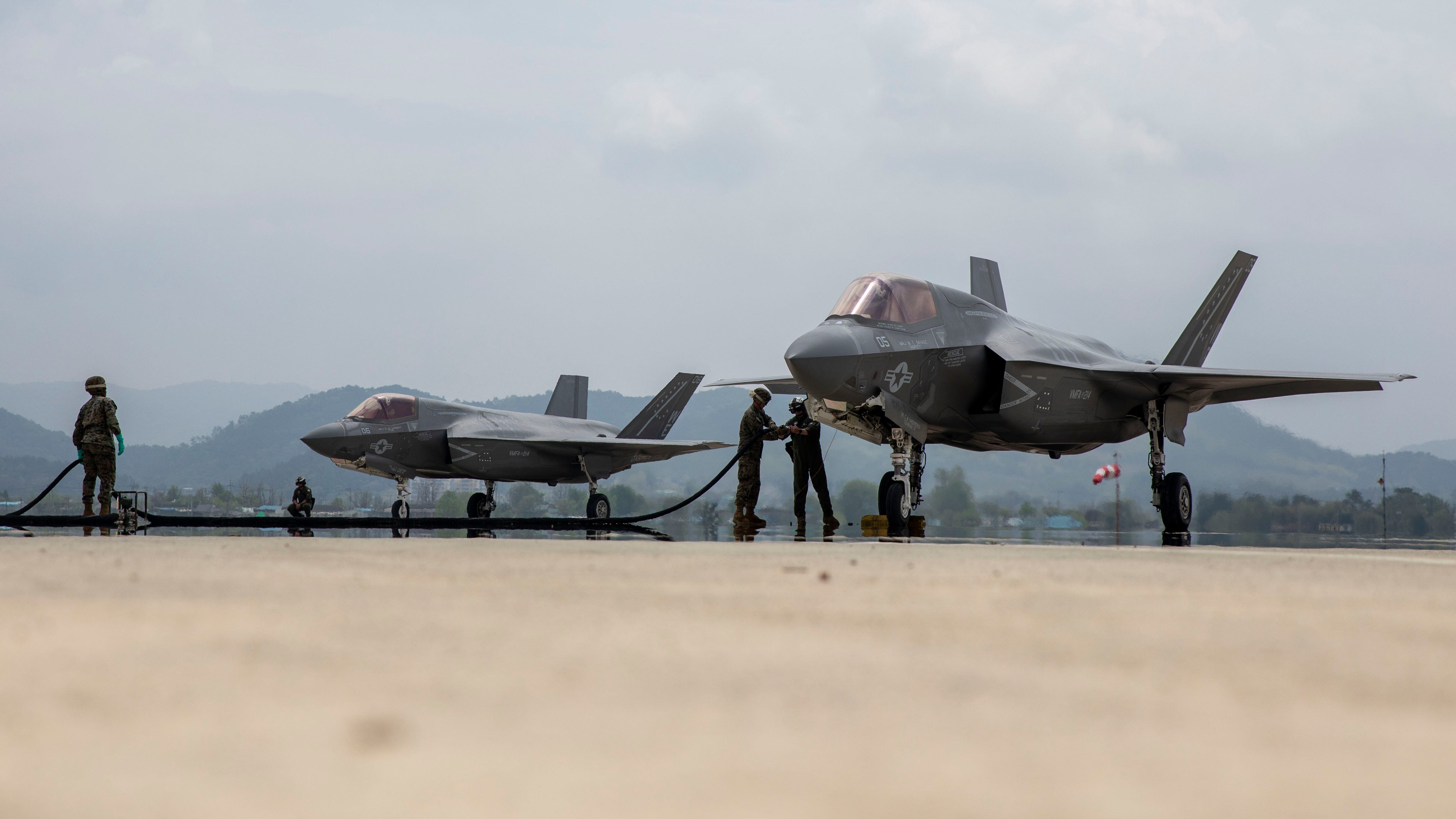
F-35 program chief warns fleet has outgrown its support system amid record-low readiness
The Pentagon will spend $13.7B to fix the problem of not having spent enough on spare parts. The F-35's program chief told senators Tuesday that the fighter has outgrown a sustainment system built for 700 to 800 aircraft, a fleet that now numbers more than 1,300.
A recent GAO report put readiness at a record low, with only 25% of jets fully mission capable and the broader mission-capable rate down from 67% in 2021 to 44%.
The program's fix is a support reset through 2031, even as it asks for more than $13B for the jet in 2027 alone.
The Marine Corps has already accepted six F-35Bs with no radar installed.
The essential equation of drone warfare: Intelligence + autonomy + scalability = a tactical advantage. Less risk. Lower cost. More lethality. Stark's drones aren't just weapons — they're the market making its argument.