
Rival Robots
Prototypes-To-Primes #1:The $12 Motor That Could Ground America’s Military Drones

BLUF: This is my first article in a series called “Prototypes-To-Primes” where I profile the founders, investors, and companies they are building. Here I hope to shine a light on the hardworking people building in the toughest sector for the challenges of national security. This first one is a great story of a BattleBots champion and a serial entrepreneur who learned manufacturing in China and walked into a defense supply chain gap. What they’re building could matter more than the OEMs they supply.
Last November, DefenseScoop published a story that should have landed harder than it did.
The headline was buried in the arcane language of procurement policy, but the substance was stark: the majority of drones the Pentagon has approved for military use (the platforms being fielded right now, in programs with names like Drone Dominance) are flying on motors made in China. Not Chinese-designed. Not Chinese-sourced components in an otherwise American supply chain. Chinese motors. The single most critical mechanical component in an unmanned aerial vehicle, spinning at tens of thousands of RPM in service of American national security, is manufactured in Shenzhen and Jiangxi.
How did this happen? The answer is a case study in how policy moves slower than technology. When Congress wrote the provisions of the National Defense Authorization Act that prohibited Chinese components in defense drones, they were thinking about cameras, communications links, chips that could transmit data back to Beijing. Motors were not on the list. They don’t store data. They don’t have network connections. They just spin. So nobody banned them.
A former senior defense official put the cost reality to DefenseScoop with uncomfortable precision: a brushless motor from China runs $12 to $25 per unit. The best American-made equivalent costs $100 to $225. Four motors per drone. Do the math. The Pentagon has been choosing the $48 option over the $400 option, and it has been doing so on platforms designed to operate in contested airspace against an adversary that manufactures those same motors.
This is the problem that Rival was built to solve. The fact that two builders stumbled into it from a robotics competition rather than from a defense policy white paper is, depending on your perspective, either a liability or precisely the point.
This week I got the opportunity to talk with Amit Ajwani of Rival and this is their story.
The Builders Who Followed the Demand Signal
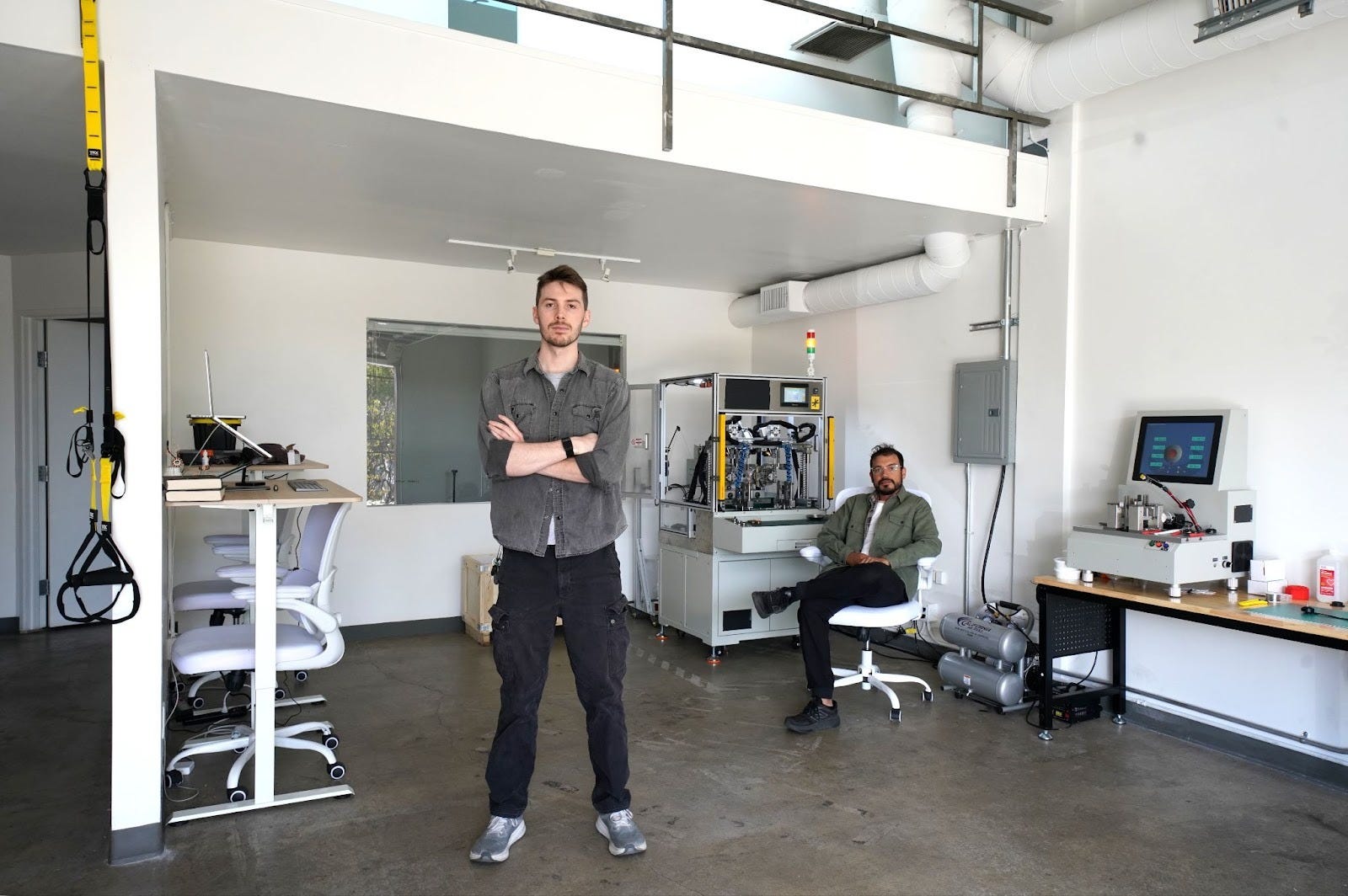
Aaron Lucas is a robotics world champion. Not in the abstract, honorific sense that Silicon Valley bestows on people who win pitch competitions. He captained a BattleBots team and drove a 250-pound heavyweight combat robot called Bloodsport onto national television. He knows what brushless DC motors do under stress because he has built them by hand for machines specifically designed to destroy other machines. That is not a background you manufacture with a LinkedIn profile.
Amit Ajwani grew up in Canada and learned entrepreneurship the hard way, bootstrapping a company called Makers from zero to $40 million in revenue across four countries over seven years. But the chapter of his story that matters most for understanding Rival is the time he spent in China and Taiwan. He didn’t go as a tourist or a sourcing agent. He went as a student of manufacturing systems, embedding himself in the industrial ecosystems that had spent decades perfecting what America had quietly abandoned: the ability to make precision hardware at scale.
What Amit understood from that experience is that Chinese manufacturing dominance isn’t simply a function of cheap labor. It is the product of co-located supply chains, specialized tooling clusters, and a culture of relentless iteration built up over generations. The knowledge is systemic. And it is almost entirely absent in the United States. He came back with a question that most entrepreneurs would find impractical: what would it take to rebuild that system, one component at a time, on American soil?


That vision was compelling enough to earn Rival its first institutional check: $100,000 from Adam Draper’s Boost VC. Draper is one of the most closely watched early-stage investors in the country, the son of legendary venture capitalist Tim Draper, and the manager of a fund whose performance has drawn serious attention across the venture ecosystem. Boost has made a name for itself backing unconventional founders building in deep tech and hard science at the earliest possible stage, the kind of bets most funds won’t take until there is far more proof. The fact that Rival earned that check before it had a factory, a product, or a defense customer is a signal worth noting.
The answer, it turned out, started with a brushless motor.

The Accidental Defense Company
Rival did not begin as a defense company. It began as a competition. Aaron and Amit identified a gap that anyone who has spent time in the robotics world knows exists but nobody had solved: the FIRST Robotics Competition (FRC), the premier robotics competition organization, serves high school students with extraordinary rigor and professionalism. Then those students graduate, and there is nothing. No next level. No institution designed to take the best young robotics engineers in the country and push them further. Rival was founded to fill that void: a robotics competition that gave engineers somewhere to go after high school, and in doing so, built a community of 600-plus builders who actually make things with their hands. The defense opportunity came later. The community came first.
The original business model, as Amit describes it, was challenging in the way that community-first businesses always are: the path from “we have a lot of engineers who trust us” to “we have a sustainable revenue model” is rarely straight. What clarified the path was a problem they kept running into while working with the community: everything was coming from China. Every iteration cycle, every prototype, every component that needed to be changed or improved required a transoceanic supply chain with lead times measured in weeks and minimum order quantities that punished experimentation.
The defense market didn’t create this problem. It revealed it. When drone companies competing in the Pentagon’s Drone Dominance program started reaching out (companies building platforms for the U.S. military that were suddenly unable to source motors from their traditional Chinese suppliers) Rival realized it had been building toward this moment without knowing it. The demand pull from national security turned a manufacturing thesis into a burning commercial problem.
This is a distinction worth sitting with, because it matters for how you evaluate the company. Rival is not a defense tech startup that decided manufacturing was a good wedge. It is a manufacturing company that the defense market came to find. The difference is not merely semantic. It is the difference between a team that understands hardware at a cellular level and one that learned about brushless motors from a market research report.

The Factory in Los Angeles
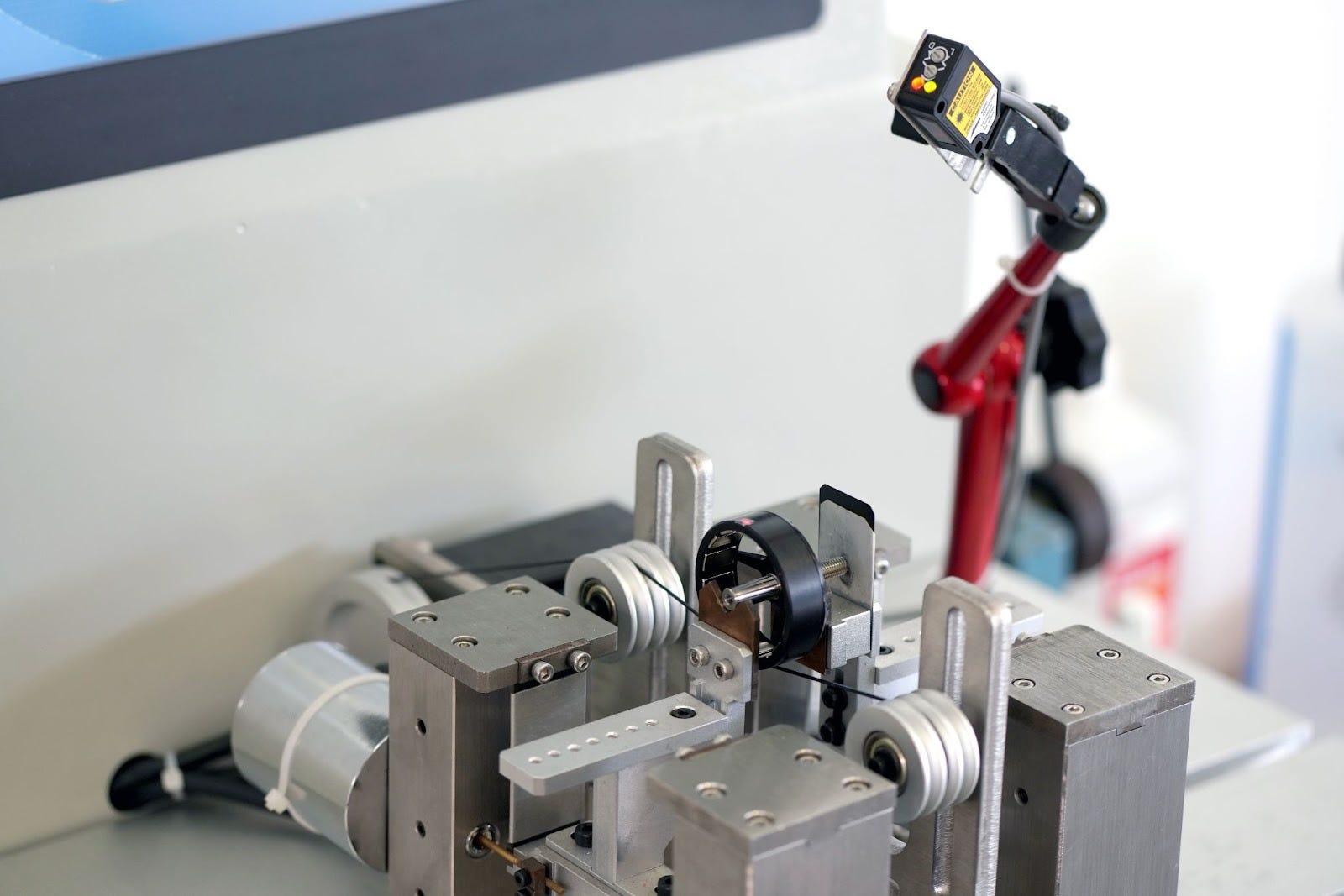
In six months, Rival reverse-engineered the specialized equipment, tooling, and supply chains required to manufacture drone motors domestically, built a production facility in Los Angeles capable of producing 2,000 brushless motors per month, and shipped its first motors to a leading drone manufacturer currently competing in the Drone Dominance program. Seven months from concept to delivered hardware. In manufacturing, that is not a timeline. It is a sprint.
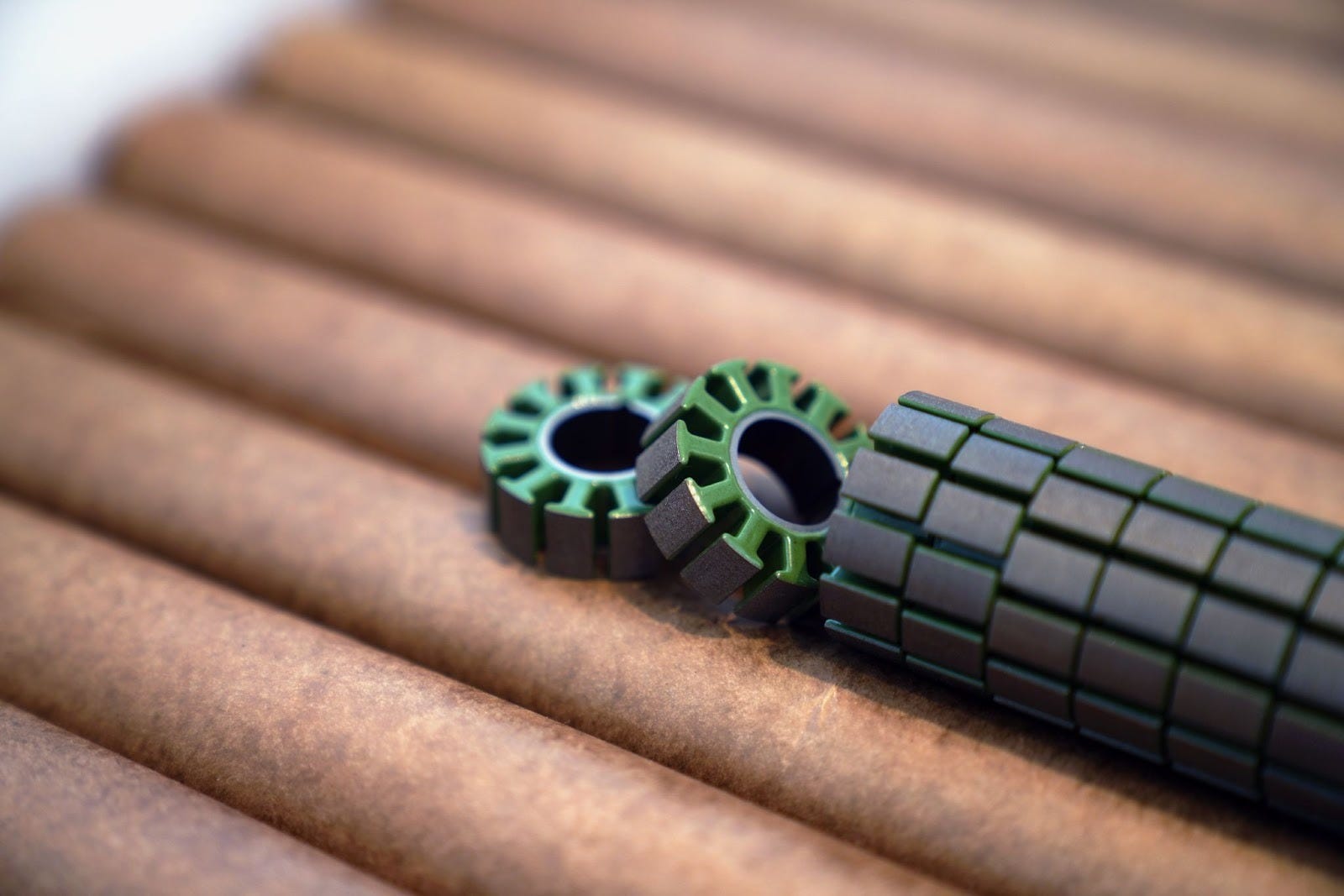
The product itself is deceptively simple in appearance: a compact electromagnetic assembly of copper windings, precision bearings, and rare earth magnets that fits in the palm of a hand. But the manufacturing process is not simple. It requires custom winding machines, precision tooling, quality control processes that can catch variance measured in microns, and supply chains for rare earth materials that are themselves subject to the geopolitical pressures that created the problem in the first place. China’s recent export controls on rare earth minerals have tightened that picture further.
Rival’s roadmap calls for scaling to 20,000 motors per month by the end of 2027, with a total target of 100,000 motors sold to leading drone companies along the way. The second component is already in development: an actuator for humanoid robots and quadrupeds, the next rung on the ladder of the American robotics supply chain they are trying to rebuild.
The Flywheel
What separates Rival from a straightforward domestic manufacturing play is the community flywheel they are building around it. The 600-person community is the seed, but the vision is more ambitious: a series of robotics competitions where participants design and build next-generation robots using Rival components. Winners get prizes, funding, or jobs. The competitions serve as a product development engine, a talent recruitment pipeline, and a marketing mechanism simultaneously, with the added advantage that the people most likely to push Rival’s components to their limits are exactly the engineers who will identify where they need to improve.
The analogy is less a traditional defense supplier and more a platform company that happens to make physical things. Manufacturing revenue funds the competitions. Competitions produce better components and surface better engineers. Better engineers build better consumer products. Better products fuel demand for more components. It is a flywheel that, if it spins, turns a capital-intensive manufacturing business into something with the compounding characteristics of a community-driven technology platform.
The formal competition structure is still being built. What exists today is the community, the proof of concept from Aaron’s competitive robotics background, and the first customer relationships that validate the manufacturing capability. The flywheel is spinning at low RPM. The question is whether it can be wound up.
The Hard Part
Here is the number that puts everything else in context: Rival has built all of this on $200,000 in total capital raised. The first $100,000, from Boost VC, was spent on an earlier version of the company entirely. The factory in Los Angeles, the reverse-engineered tooling, the first motors shipped to a Drone Dominance competitor: all of it came out of $100,000 in friends and family funding and whatever revenue the business has generated along the way. For a software company, $200,000 is a rounding error. For a hardware manufacturer building precision components for military-grade drones, it is either insane or extraordinary, depending on how the next chapter unfolds.
The honest version of Rival’s story also includes the parts that don’t fit neatly on a pitch deck slide. Manufacturing companies have a cash cycle that is structurally punishing and almost entirely alien to the software-trained venture investors who have dominated early-stage funding for the past decade. You need capital to build production capacity. You need production capacity to earn a letter of intent. You need a letter of intent to raise capital. The sequence is circular and unforgiving, and it is compounded in the defense market by the “who you know” dynamics that Amit describes with candor: getting attention from government buyers and tier-one suppliers often requires physical proximity to defense ecosystems that Rival, based in Los Angeles, does not yet have.
The scaling challenge is real. Going from 2,000 motors per month to 20,000 is not a linear problem. It requires capital investment in production equipment, supply chain partnerships for materials, quality systems that can sustain higher volumes, and a workforce with manufacturing skills that are genuinely scarce in the United States. Each of those constraints compounds the others.
The deeper strategic challenge is graduating from spot supplier to embedded partner. Right now Rival sells motors to drone companies. The durable version of this business is one where drone companies design their platforms around Rival’s components from the start: where Rival is in the bill of materials, not a line item that can be swapped when a cheaper option emerges. That transition requires relationships, reliability, and a track record that a seven-month-old manufacturing operation is still building.
If the Pentagon Moves Too Slowly
One of the more instructive things about Rival’s position is that the defense market is not the only market. The same brushless motor that powers a military drone also powers a humanoid robot, an industrial quadruped, an autonomous delivery vehicle. The commercial robotics market (which by some projections is approaching the largest industrial transformation in history) needs exactly what Rival is building, and it is not subject to the procurement timelines, budget cycles, and continuing resolution paralysis that make selling to the Pentagon a test of institutional patience.
The defense beachhead is real and strategically valuable. NDAA compliance requirements, the policy trajectory toward closing the motor loophole, the Drone Dominance demand signal: all of it creates a pull that a purely commercial manufacturer would envy. But Rival is not a hostage to it. The component stack they are building serves the entire robotics ecosystem. That is a meaningful hedge in an environment where defense budgets are contested and acquisition timelines are long.
There is a deeper argument embedded in Rival’s approach that most venture investors miss, and it is worth naming directly. The conventional playbook for VC-scale robotics companies has not worked. The graveyard of well-funded robotics startups that raised enormous rounds on the promise of autonomous systems and never found a durable business model is long and well-documented. The reason, Amit argues, is structural: pure-play robotics companies are either building on top of someone else’s hardware stack (which means their margin and their defensibility belong to the component supplier) or they are trying to vertically integrate everything at once, which is capital-intensive beyond what most venture timelines can absorb.
Rival’s bet is that the right model is the one DJI actually used; though not in the way most people tell that story. Frank Wang had an obsessive product vision from day one: a crash-proof, ready-to-fly aircraft. But it was DJI’s manufacturing depth that positioned them to recognize the opportunity when it arrived. Hobbyists were buying DJI flight controllers and gimbals and awkwardly strapping GoPro cameras to DIY frames. DJI saw the market signals, had the capability to act on it, and packaged everything into one ready-to-fly box: the Phantom 1. The market didn’t hand them a product. It handed them a signal that only a company with deep manufacturing capability could convert into something real. Rival’s competitions are built on the same logic: stay close to the builders, watch what they make with your components, and be ready to move when the market shows you what it actually wants.

What to Watch
Three milestones in the next 12 to 18 months will tell you whether Rival is on the right trajectory.
First, watch whether they get designed into a second drone platform. One customer validates the capability. Two customers begins to validate the business. The transition from “a company that delivered motors” to “a company that drone manufacturers build around” is the most important early signal.
Second, watch whether Congress closes the motor loophole in the next NDAA cycle. If legislators update the Chinese component prohibition to include motors, batteries, and electronic speed controllers (the three “dumb parts” that currently have no restriction) Rival’s total addressable market changes overnight. That is not a speculative catalyst. It is a policy conversation that is already happening.
Third, watch the capital raise. Manufacturing at scale requires a different kind of investor than software: patient capital comfortable with physical assets, long production cycles, and the unsexy work of building supply chains. Who Rival brings onto their cap table in the next 12 months will say a great deal about whether the right institutional support is in place for the scaling challenge ahead.
America’s dependence on Chinese motors is not, at its core, a national security failure. It is a manufacturing failure: a decades-long retreat from the industrial base that makes advanced systems possible. Rival is not trying to solve that problem at a policy level. They are trying to solve it one component at a time, starting with a brushless motor in a factory in Los Angeles, built by a BattleBots champion and an entrepreneur who spent years in China learning exactly how the thing they’re competing against actually works.
That is not a guarantee of success. It is, however, the right place to start.
Prototypes to Primes is a series spotlighting early-stage defense tech companies navigating the long road from first prototype to programs of record. If you’re building in this space and want to be considered for a future spotlight, reach out.
You failed to mention where their magnets are sourced. 90% odds they come from…China.
As far as o know only one company makes these motors without Chinese magnets. AeroMotors. No US drone manufacturer will buy from them for one reason. They are Ukrainian, and no Pemtegon contractor wants to be on the wrong side of Trump.
Great piece!
But a motor doesn't think. So what makes it different from Titanium, which as a matter of policy the US sourced from wherever it could be found (frequently in Communist countries) during the Cold War? Why's that model not applicable here?