

Adventures in Spain
Running with the bulls, seeking meaning and the importance of liminal spaces

This essay is entirely non-defense related and serves as my long form “out of office” message before I depart for a month of moving and traveling. If this doesn’t interest you, feel free to stop here. But if you want to be moved by stories of childish foolishness, images from the Hudson River School art movement, and the importance of liminal spaces in life, then by all means keep reading.
The Encierro
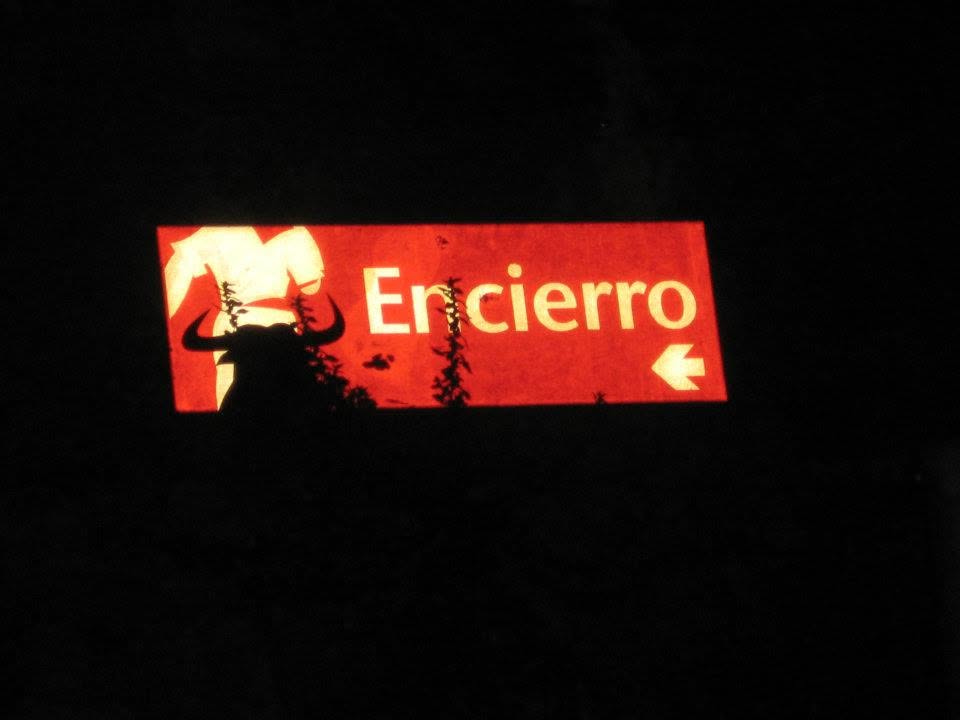
The sun was rising in Pamplona-Iruña, and the roar of the crowd that had gathered for the Encierro was deafening.
Everyone, including my friend Preston and me, wore the iconic combination of red and white that characterized the participants of the annual running of the bulls, for which Pamplona is famous.
Police were moving through the crowd, pulling aside participants who were too drunk or tired to run safely (yes believe it or not there is some safety involved). The custom of the encierro is to spend the entire night drinking and partying before moving to run with the bulls at sunrise. (Steves, 2026) Despite being 20 years old and in our prime, Preston and I opted to survive the night by remaining as sober as possible, concentrating instead on the run ahead.
This was less a decision based on good judgment, and rather it was because after a long summer in Spain we were completely and unequivocally broke. With only a return ticket to our name, we relied on bread, water, and the kindness of strangers to survive the remaining week until our return.
The police moved past Preston and me, in search of offenders to remove from the crowd.
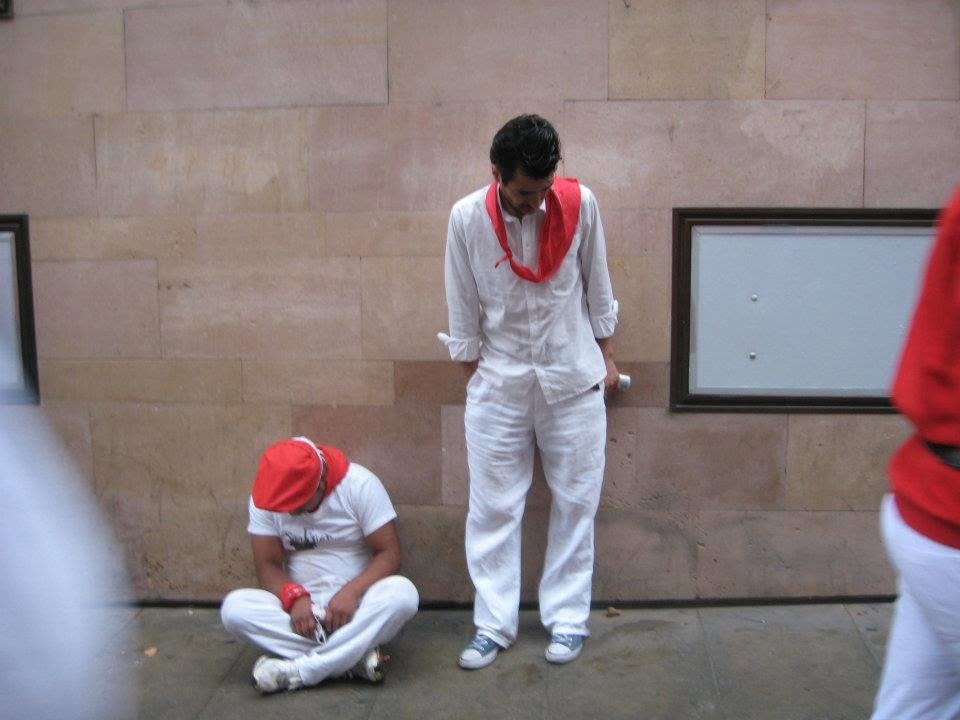
The sleeping man in question. Apparently I had the wherewithal to take a photo instead of providing actual help. Again, I was 20, so forgive me my transgressions.
Meanwhile, you could hear the bulls bumping against the gates we had foolishly placed ourselves against. We would only learn afterward that for a good run, you never start close to the gate, or at least not if you hope to make it into the stadium at the end. But we didn’t know that then.
Instead, we sat next to the gate and watched the Bravos — the large black bulls, the truly fearsome ones — mingle alongside the smaller, more docile white bulls that served as their guides. Beside us, a man who’d been standing since sunrise finally lost the fight with sleep and pitched forward onto the cobblestone, drawing the police away just before the gates opened.
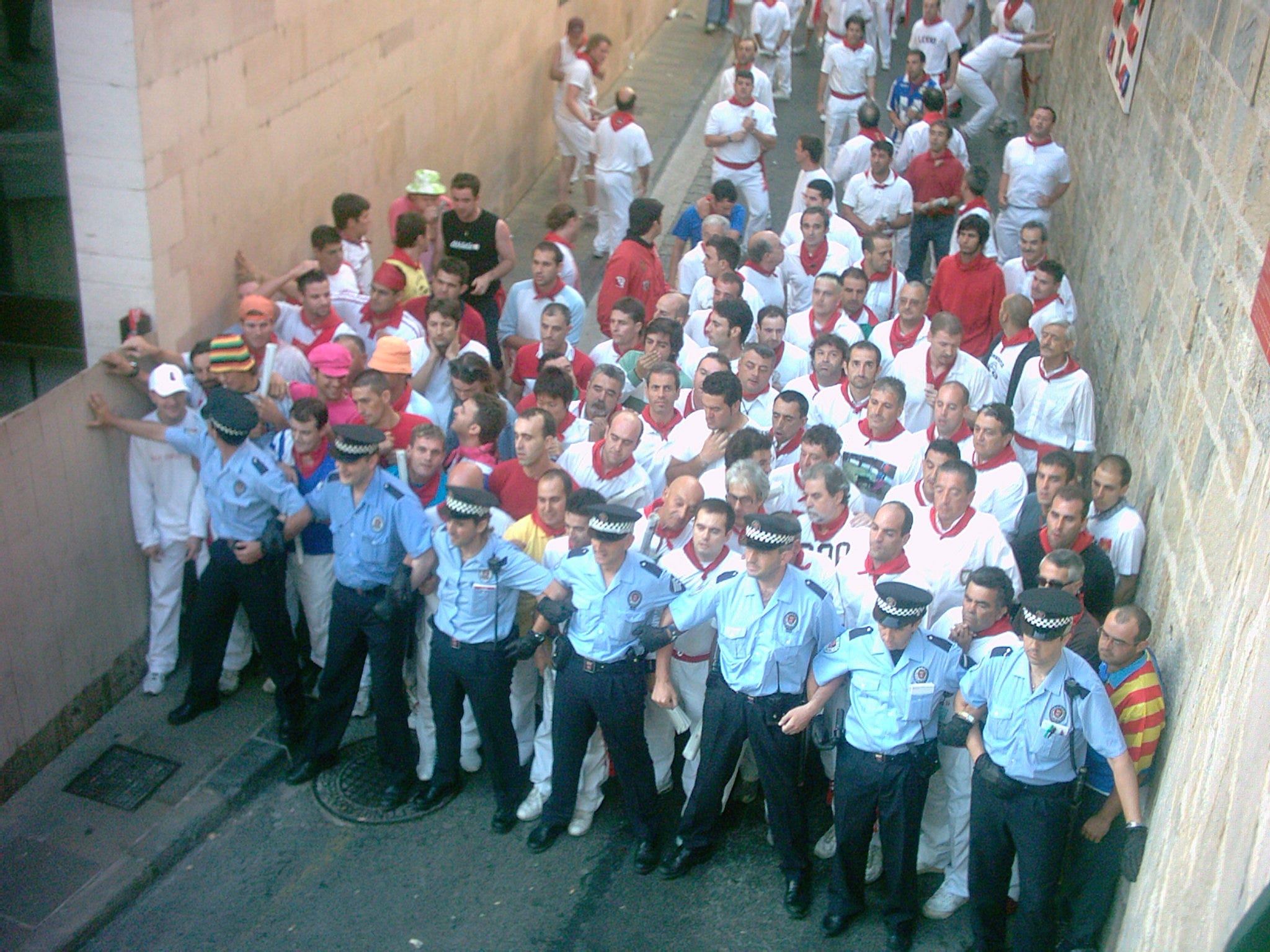
Perhaps only a minute later, at 8:00 am, two rockets fired into the early morning sky, signaling the beginning of the race and the release of the bulls.
Whatever risk-taking ambitions had driven Preston and me to race that day were quickly replaced with pure and unadulterated fear. There are no words that I can write here that can fully convey how terrifying the combination of these bulls’ size and speed can be. These are massive animals, weighing in excess of 1,200 lbs, capable of running 25 miles per hour in a straight line, though the course’s sharp turns (the dogleg at Mercaderes especially) force them to slow just enough for the pack to survive it.
The full race is quick. It lasts somewhere between two and a half and three minutes.
For the most experienced of runners, the “perfect race” is one where, having the bull’s horns squarely behind you (”running on the horns”), you can feel the hot breath of the Bravos on your back for 20-30 seconds before expertly diving off into safety.
I would never claim to be an expert, but I certainly felt the bulls’ breath that day. Although if I actually lasted a full 30 seconds before diving off onto the fence, I would be shocked. Adrenaline has a funny way of searing some things into your memory but washing the rest away completely.
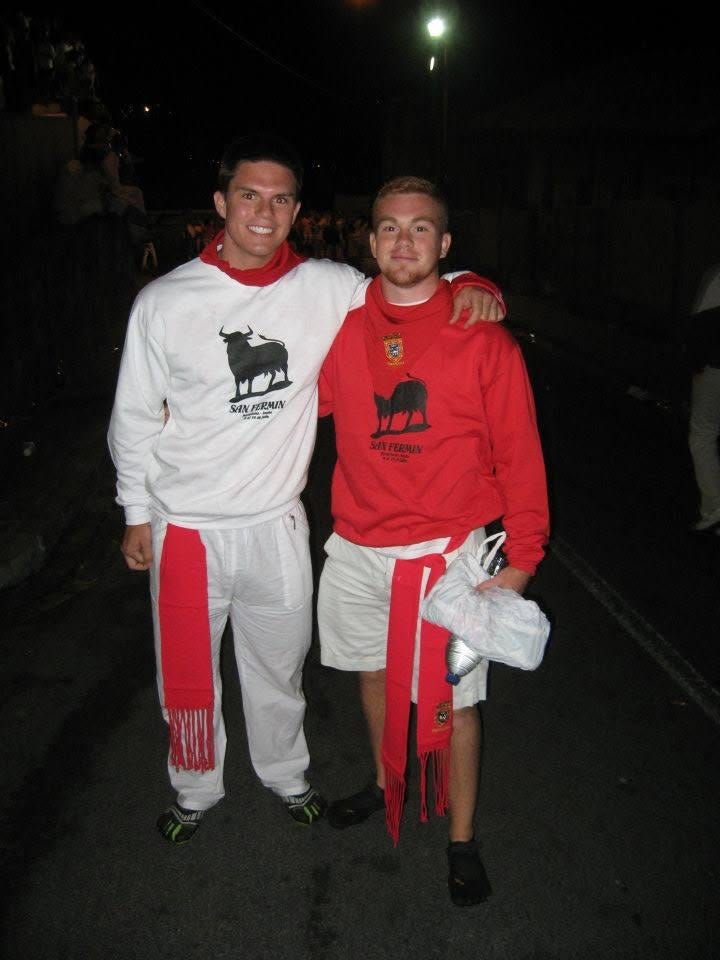
Preston and I have obviously lived to tell the story without being gored by a bull. We celebrated that morning with a churro con chocolate. Calories after near-death experiences don’t count.
We made grand plans that only 20-year-olds with no conception of the demands of the real world could make. The kind of plans that only look foolish once experience has taught you what is real. We’d come back to the north of Spain to hike the Camino de Santiago. After that, somewhere new every year.
Almost 14 years later, I found myself sitting in a Harvard classroom listening to Arthur Brooks talk about his own career and life.
Running the Horns
He began with a picture of himself on a trail in the woods, and recounted for us how, after stepping down as the CEO of a think tank in Washington, D.C., he had taken advantage of that time and space to hike the Camino de Santiago.
Looking at that photo, I thought of a different picture. One I’d been carrying around for years without quite knowing what to do with it. Before coming to HBS, I lived in Washington, D.C., and one afternoon I stumbled into the National Gallery of Art and found myself standing in front of Thomas Cole’s The Voyage of Life, a set of four paintings tracking a single figure through childhood, youth, manhood, and old age. The set as a whole stopped me, but it was the picture of Youth that stayed with me. In it, a young man stands in a boat on a clear river, pointing toward a shimmering castle suspended in the clouds ahead of him.
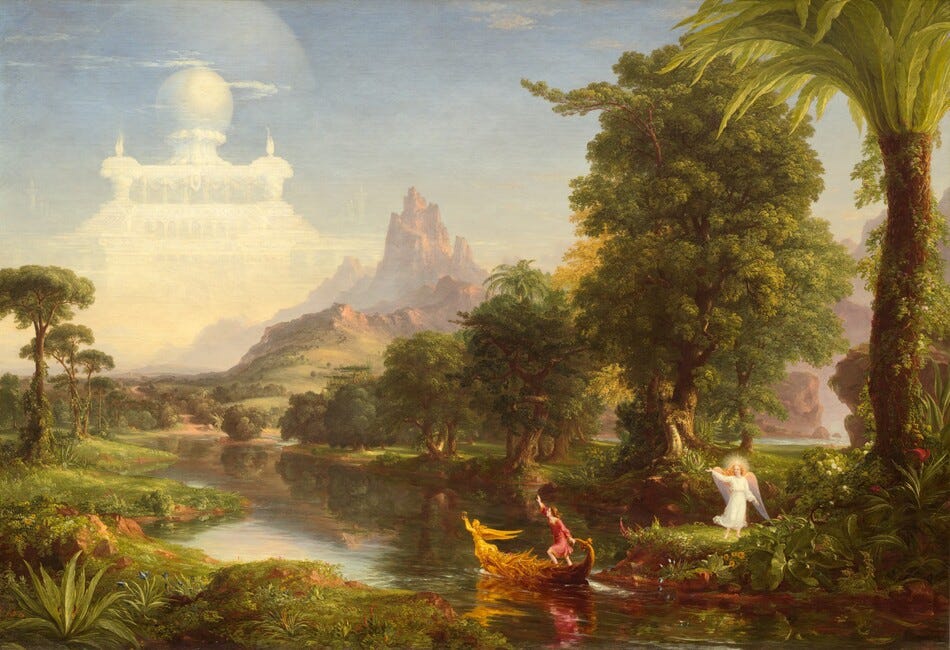
Cole himself, writing about the painting, was under no illusion about what that castle actually was:
“The scenery of the picture — its clear stream, its lofty trees, its towering mountains, its unbounded distance, and transparent atmosphere — figure forth the romantic beauty of youthful imaginings, when the mind elevates the mean and common into the magnificent, before experience teaches what is the Real.”
I can practically hear the disdain in that last clause: before experience teaches what is the Real. Cole knew the castle wasn’t real. He painted it anyway, because the wanting of it is the whole point of being 20 and broke and sitting against a bull gate in Pamplona with no idea what you’re doing.
The third painting in the set, Manhood, is shows the same boat and man worn and destroyed. The same river turned to whitewater, the rudder gone, the figure gripping what’s left of the hull and praying. A decade flying helicopters and driving warships through the Strait of Hormuz gave me a fairly literal education in what that painting is describing. Fatherhood, in its own way, has given me another. Most days feel closer to Manhood than to Youth. But every morning I still try to wake up chasing the castle anyway. I’ve come to believe that the day you stop reaching for it is the day you start aging on purpose.
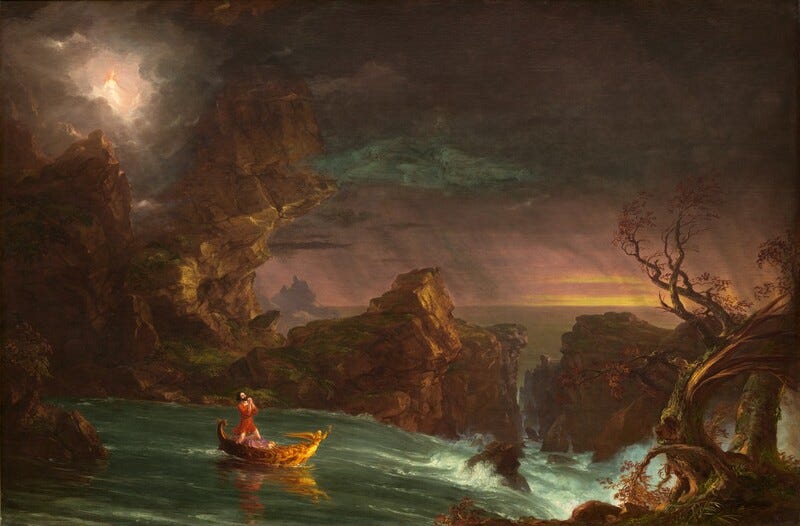
Check out the full collection of Thomas Cole here.
Brooks has a word for the water between those two paintings. Liminality. He takes it from the psychologists, and he means the time between things: between roles, between organizations, between career paths, and between one version of yourself and the next.
We have names for the chapters in our minds: midshipman, aviator, student, or whatever comes next, but nothing for the white space in between, so we treat that space like an accounting error. Something to be compressed. You resign on a Friday, you start on a Monday, and you tell yourself you were being efficient.
Brooks argues that you do the opposite. The gap is uncomfortable by design: you’ve set one identity down and haven’t yet picked the next one up, and there’s nothing in your hands.
The questions he poses for this stretch of river are almost insultingly simple. What do you keep? What do you carry forward but do differently? What do you put down for good? What do you learn that you’ve never done before?
He has a companion argument about what to actually do with the space once you’re standing in it, and the answer is not to rest. Openness to new experience (what psychologists sometimes call neophilia) functions as its own engine of interest. Having your curiosity provoked is pleasurable in itself, and the people who keep putting themselves in front of unfamiliar things trip that wire more often, and harder, than the people who don’t.
An adventure requires you to be bad at something in public: a new country, a new language, a new trade, a new set of people who haven’t read your résumé and wouldn’t be impressed by it if they had. For anyone who has spent a decade accumulating competence, that’s the actual price of admission, and it’s why most people in transition book a vacation instead of an adventure. A vacation is a rest from your identity. An adventure is a test of it.
To this day, the feeling of running on the metaphorical horns of the bull, the hot breath at your back, the couple of seconds before you have to decide whether to hold your ground or dive for the fence, is one that I rather enjoy, and one I try to keep seeking out.
The Road Goes Ever On
I spent ten years flying helicopters and driving warships through the South China Sea, the Middle East, and the Eastern Mediterranean. I’ve tracked submarines. I’ve run interdictions on Houthi weapons smuggling operations off the coast of a country most Americans couldn’t find on a map.
When I left the Navy for business school, I told myself I wanted a simpler, quieter life. In some ways I got one. What’s painfully clear two years later is that the off switch for that feeling is much harder to find than I expected. I work from sunrise to sundown on any number of things. I take on too much, and I love almost all of it. Neither my family nor my friends would testify otherwise.
But I think it is high time I took a detour for another adventure and put the work aside for a while.
So as for how I’m using this stretch of open water: after 14 years of delayed promises, I’ll finally take that trip to northern Spain and hike the Camino de Santiago. This time I won’t be a broke college student. I’ll bring slightly more resources, better judgment, and a fair amount of lived experience with me on the trail.
As I write this, I sit among moving boxes, packing for our return from Boston to Washington, D.C., where we’ll start the next chapter of our careers and lives. The chapter of graduate school and military service is closed. We’re turning the page.
Before the words of the next chapter start, though, I intend to make good use of this liminal space. With that, I’m putting on my out-of-office reply for the next month. Any writing I do will live on a notepad, not on Substack, and I know my readers will forgive the silence even if the algorithm won’t.
What the adventure holds I’ve already told you. What the next chapter holds, I’ll leave for another time. I’ll close instead with two lines from Tolkien (a clue perhaps?), borrowed and true enough on their own:
The Road goes ever on and on
Down from the door where it began.
Far ahead the road has gone. I mean to follow it, and see where it joins the larger way.
Thank you for reading this far! With this closing note, I am officially “out of office,” so my writing will slow down, and my ability to answer messages in a timely manner will diminish.
Talk to you all soon!
Well said, Matthew. Enjoy the upcoming adventure!